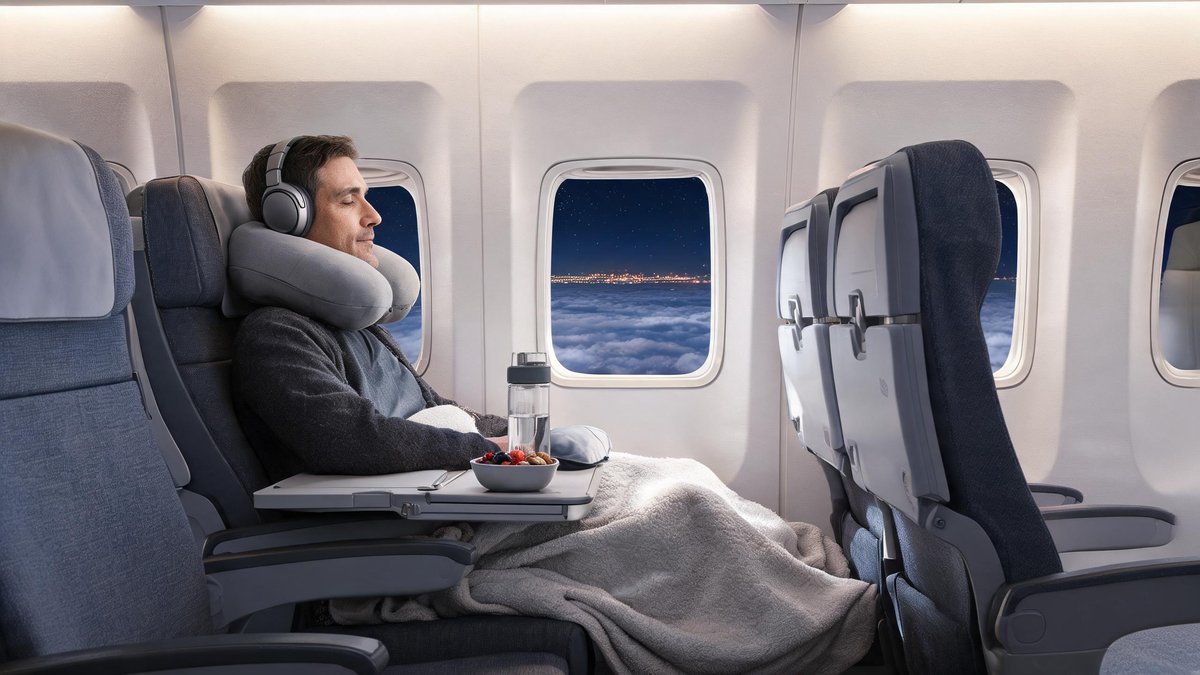
Hydrate With Purpose, Not Just Water
Guzzling plain water alone won't keep you comfortable. At cruising altitude, cabin air hovers around 10 to 20 percent relative humidity—drier than most deserts. In a single 10‑hour flight, your body can lose up to 1.5 liters of water through respiration and skin evaporation. That constant water loss thickens mucus, dries your eyes, and leaves you feeling sluggish. Yet simply chugging water every 30 minutes won't fix the electrolyte imbalance that low humidity creates. You need sodium, potassium, and a little glucose to actually hold onto the fluid.
Pack a tube of effervescent electrolyte tablets or single‑serve powder sticks. Drop one into your water bottle after the seatbelt sign dings off, then sip steadily—not all at once. Skip the free alcohol and limit coffee. Both act as diuretics, accelerating fluid loss when your body is already parched. If the drinks cart comes by, ask for sparkling water with a slice of lemon; it feels festive but won't sabotage your hydration. By holding off on cabin booze and replacing it with an electrolyte mix, you'll step off the plane without the puffy eyes and cotton‑mouth that plague most travelers.
Move On a Strict Schedule
Sitting motionless for six, eight, or 14 hours isn't just uncomfortable—it's a vascular risk. Research shows your chance of developing deep vein thrombosis (DVT) on flights longer than four hours can be two to three times higher than your baseline risk. Even if you're healthy, stagnant blood pools in your lower legs, causing swelling and stiffness. The good news: simply activating your calf muscles drops that pooled‑blood volume fast. A 2019 study in the journal Thrombosis Research found that in‑seat exercises combined with occasional walking reduced post‑flight leg swelling by roughly 30 percent.
Travel Tip: The Nomadic Matt blog popularized the $50/day budget travel philosophy. In Southeast Asia, South America, and Eastern Europe, $50 covers a comfortable private room, three meals, transport, and one paid activity.
Set a recurring alarm on your watch or phone for every 60 minutes. When it buzzes, run through two minutes of ankle circles, heel‑toe lifts, and knee‑hug pulls right in your seat. Every two hours, get up and stroll to the lavatory—even if you don't need to go. While waiting, do standing calf raises against the galley wall. If you're in the aisle seat, nobody will notice you doing quad squeezes. This isn't a full workout; it's a blood‑circulation cadence. Treat it like a non‑negotiable meeting and your legs will thank you when you land.
Dress to Combat Swelling and Temperature Swings
Cabin temperatures bounce between 18°C and 24°C (64°F–75°F) on the same flight, thanks to erratic air‑conditioning controllers. Meanwhile, your feet and ankles can swell enough to make your shoes feel two sizes too small. Your clothing choices directly determine whether you'll shiver, sweat, or simply exist in misery. Compression socks reduce that ankle swelling by up to 60 percent, according to a 2016 meta‑analysis in the European Journal of Vascular and Endovascular Surgery. They also lower the odds of post‑flight fluid retention that can last 24 hours.
Start with a moisture‑wicking base layer—a merino‑blend T‑shirt or long‑sleeve top. Add a soft mid‑layer like a fleece half‑zip, and keep a packable down jacket or oversized scarf within reach. Slip into graduated compression socks (15–20 mmHg is plenty for most people) before you leave home, and wear them the entire flight. Choose slip‑on sneakers or loafers so you can kick them off without wrestling laces in a cramped footwell. When the cabin warms up, peel off the mid‑layer; when the overnight freeze hits, zip everything back up. You'll have a personalized microclimate instead of relying on a thin airline blanket.
Sleep Smarter, Even in Economy
Solid rest at 35,000 feet isn't just about dozing off—it's about aligning with your destination's time zone and protecting your neck from waking up in pain. A 2020 sleep trial by a major airline found that passengers who used a contoured neck pillow (one that supports the chin) rated their sleep quality 40 percent higher than those using a basic U‑shaped cushion. And if you're serious about beating jet lag, consider melatonin. A meta‑analysis of 27 studies published in Sleep Medicine Reviews reported that melatonin taken close to target bedtime reduced jet lag symptoms by about 50 percent on trips crossing five or more time zones.
Invest in a pillow with a chin‑cup design or lateral support; it stops your head from flopping forward, which is the biggest enemy of airplane sleep. Pair it with a silk eye mask—silk doesn't tug on eyelashes and blocks nearly 100 percent of cabin light. An hour before you intend to sleep, switch to blue‑light‑blocking glasses and dim your screen. Pop a 0.5 mg melatonin lozenge (or 3 mg if your doctor okays it) and pull the mask down. Even if you only manage three solid hours, you'll feel surprisingly refreshed compared to a non‑stop movie marathon.
Pack a Tactical Comfort Kit in Your Personal Item
The difference between limping off the jet bridge and striding out like you own the terminal often comes down to a palm‑sized pouch. A 2018 survey by the American Academy of Otolaryngology found that 45 percent of travelers experience sinus discomfort on long‑haul flights, largely due to desiccated mucous membranes. Saline nasal spray rehydrates those passages in seconds and reduces sinus pressure that can radiate into a headache. Meanwhile, noise‑canceling earbuds cut low‑frequency engine drone by up to 20 decibels, slashing that fatigue‑inducing background roar.
Build a small kit that stays in your backpack: a travel‑size saline spray, a rich hand cream (liquids under 100 ml), a hydrating lip balm, preservative‑free eye drops, memory‑foam earplugs, and a pair of wired earbuds for the seatback screen. Toss in a couple of unsalted almonds or a protein bar so you aren't held hostage by meal service timing. Apply the hand cream after every wash, spritz the saline before takeoff and every three hours, and pop in the earplugs as soon as the cabin lights dim. You'll avoid that sandpaper‑eyed, cracked‑lip feeling entirely.
Eat Light and Time Your Meals Right
Cabin pressure doesn't just pop your ears; it makes intestinal gas expand. At a typical cruising altitude, gas volume increases by 25 to 30 percent, which explains the bloating and cramps that hit mid‑flight. Adding a heavy, sodium‑soaked meal to that physics lesson is a recipe for misery. A single high‑salt airline dinner can cause you to retain an extra 1 to 2 pounds of water for the rest of the day, puffing up your face and fingers. Eating lighter and at the right times keeps your digestive system quiet and your energy stable.
Two hours before boarding, eat a clean meal with lean protein, vegetables, and a small amount of complex carbs—think a quinoa bowl with grilled chicken and avocado. On board, skip the bread roll and buttery sauces; stick to the salad and the protein portion of the tray. Avoid carbonated drinks completely, and instead sip an herbal tea bag you brought from home (ginger or peppermint is brilliant for settling the stomach). If hunger hits between meal services, reach for your own whole‑food snack. When you land, your stomach will feel flat and you'll have dodged the dreaded airplane bloat.