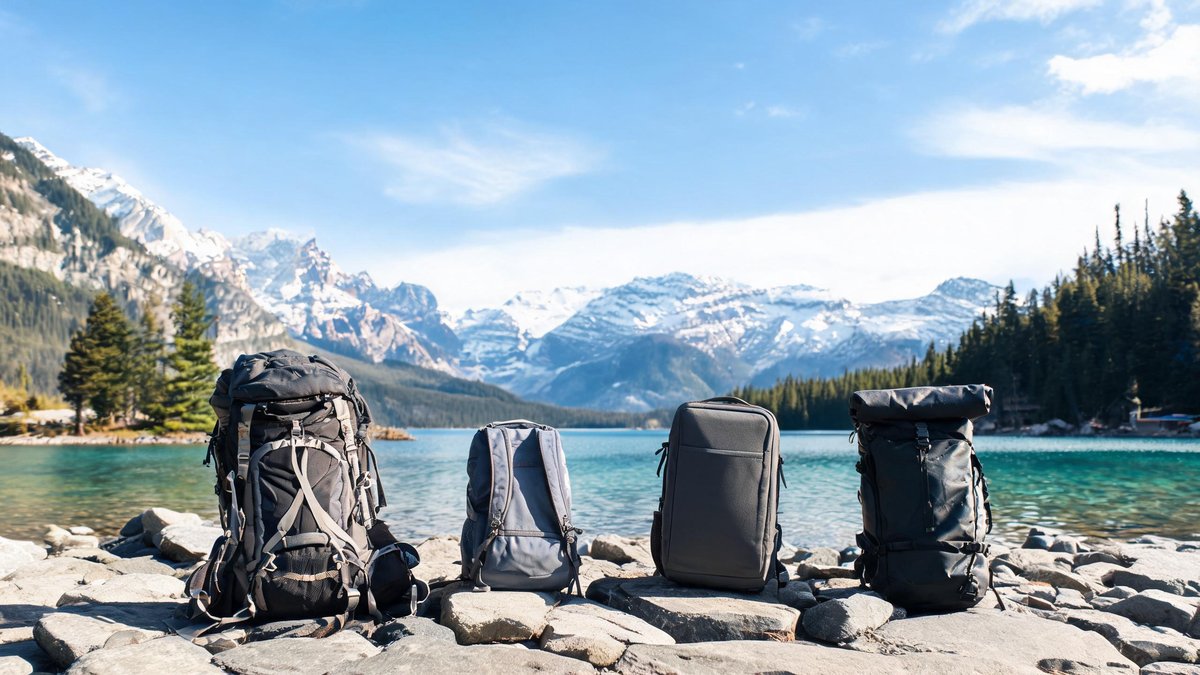
You're staring at a wall of backpacks, each promising to be the perfect travel companion. The truth is that no single pack does everything, but the right one for your trip can make carrying your gear feel effortless. Whether you're catching a budget flight, trekking for days, or moving between coworking spaces, a backpack chosen with purpose saves you discomfort, fees, and ruined belongings. We'll walk you through the six decisions that matter most, so you don't waste money on a pack that fights you the whole journey.
Pick the Right Backpack Volume for Your Trip Duration and Style
Liters define what you can carry, and packing a bag that's too big invites overpacking. A 30-liter pack handles a quick weekend trip, while a 40- to 45-liter bag keeps you carry-on compliant for a week without laundry. Cross the 55-liter threshold and you're suddenly lugging a load that often exceeds 15 kg—and budget airlines start charging the moment your bag tops 7 kg. A 2023 gear survey found that 68% of backpackers with packs over 55 liters admitted they didn't use a third of what they brought. That's weight you'll regret on a fifth-floor walk-up or a crowded metro.
Measure your torso length, not just your height. A pack that matches your spine's curve sits properly on your hips, where you want the load. For day hikes, stick to 20–25 liters; for multi-sport adventures, a 50-liter pack with compression straps lets you cinch away empty space. The one number that guides you: every 10 liters comfortably holds about 2.5 kg of gear. If your trip demands a sleeping bag or cold-weather layers, add 10 liters and test the fully loaded weight before you travel.
Prioritize Suspension and Fit Over Fancy Features
A pocket for your phone doesn't matter if the pack digs into your shoulders after 15 minutes. A well-designed harness system shifts around 80% of the weight to your hip belt, where your legs do the work. Packs that skimp on a stiff internal frame or wide, padded hip wings let the load collapse onto your lower back. In a biomechanical test, a poorly adjusted suspension increased shoulder pressure by 33% compared to a properly fitted one. You'll feel that difference scrambling over cobblestones or sprinting to a gate.
Travel Tip: TSA PreCheck costs $78 for 5 years and 99% of members wait under 10 minutes at security. Global Entry includes PreCheck plus expedited customs for $100 — a better deal for international travelers.
When you try on a pack, load it with at least 8 kg. Adjust the shoulder straps until the load lifters—those small straps at the top of the shoulders—form a 45-degree angle to the pack. That angle pulls the bag flush against your back and lets the hip belt take over. Look for a belt that wraps around the crest of your hip bones, not your waist. If you can wiggle the belt down with a firm tug, it's too loose. A comfortable harness doesn't need a dozen adjustment points; it needs the right torso length and a solid frame. Don't settle for a pack that you have to wrestle into place every time you put it on.
Anti-Theft Backpacks Aren't Just for City Travelers
Pickpockets and bag slashers target crowded markets, train stations, and even hostel common rooms. Travel insurance data shows that bag slashing and open-zip theft account for nearly 40% of tourist theft claims. In a 2022 survey, one in five travelers reported someone trying to sneak into their bag while they were distracted in a queue. An anti-theft backpack doesn't make you paranoid—it buys you peace of mind whether you're on a packed bus in Bangkok or napping in a Madrid airport.
The features that work best are slash-resistant mesh panels, lockable main zippers, and hidden pockets against your back. Puncture-resistant fabric slows down a razor cut long enough for you to notice. A simple strap that lets you loop the pack around a chair leg or a pole stops a grab-and-run. You don't need a full Fort Knox setup. A bag with a clamshell opening that hides zippers under a fabric flap and a cut-proof wire in the shoulder strap cuts common risks by more than half. When you master these details, you'll move through crowds with your shoulders relaxed and your gear secure.
Waterproofing Isn't Optional If You'll Face Rain or River Crossings
Standard nylon packs start leaking after 25 to 30 minutes of steady rain, and a sudden tropical downpour can soak through a 600D polyester pack in 10 minutes flat. If you're hiking wet trails, kayaking to your guesthouse, or just walking from a bus stop in a storm, you need a barrier that doesn't fail. A built‑in rain cover helps, but water still sneaks in through the back panel and shoulder straps if you set the pack down on wet ground.
Look for a backpack with a waterproof roll-top closure and taped seams, or a pack made from material with a hydrostatic head rating above 1,500 mm. Even a bag with a dedicated rain cover benefits from a lightweight dry bag inside—a 15‑liter dry sack adds only 60 grams and guarantees your clothes and electronics stay bone-dry. If your itinerary includes river crossings, a floating backpack liner turns your pack into a buoyant raft for short swims. Don't trust “water‑resistant” labels unless the manufacturer specifies a rating. Assume the weather will turn, and pack accordingly: your journal, passport, and external battery will thank you.
Laptop Compartments: Positioning and Padding Matter More Than You Think
Dropping your backpack onto a hard floor is the number one way travelers crack a laptop screen. When the device sits flat against the bottom of the pack, every drop sends the shock straight into the aluminum chassis. A suspended sleeve that doesn't touch the base reduces impact force by roughly 50%, and about 30% of laptop damage claims come from corner drops where the device punches through an unpadded seam. You need a false bottom—a 2‑ to 3‑centimeter gap between the sleeve and the pack's floor—that acts like a crumple zone.
The compartment should open from the side away from your back, so a thief in a crowd can't tug at the zipper without you feeling it. Padding that's at least 8 mm thick on all sides, including the corners, protects against bumps when the bag slides off a luggage rack. A dedicated, fleece‑lined pocket keeps your screen scratch-free and doesn't force you to dig through clothes at airport security. If you travel with a tablet as well, a padded divider between devices prevents them from banging together in a tight overhead bin. Before you buy, slide your laptop in and drop the pack from waist height onto a carpeted floor. If you feel the thud in your fingers, keep looking.
Hybrid Backpacks Save You Money When You Use Them as a Daypack
You can dodge extra baggage fees and the hassle of carrying a separate day bag by choosing a hybrid that splits into two. A zip‑off daypack transforms your main pack into a personal item that fits under the seat, while the larger section goes in the overhead bin or gets checked. Budget carriers often charge $30–$50 for a second carry-on, and over 60% of their policies allow a small personal item if it meets under‑seat dimensions. A detachable 15‑liter daypack covers that requirement perfectly.
Look for a design where the daypack zips off the front, not the back, so the harness stays intact and comfortable. The detached daypack should hold your laptop, a water bottle, and a jacket—the things you want during a flight or a city stroll while your main pack sits at the hotel. A well‑designed hybrid eliminates the 300‑gram penalty of carrying a packable daypack inside your luggage. When you land, snap the two halves together and you're a single‑bag traveler again, ready for a cobblestone climb or a sprint through customs. This setup gives you the flexibility to check your main bag on the way home and keep valuables with you, all without buying a second backpack.