Table of Contents
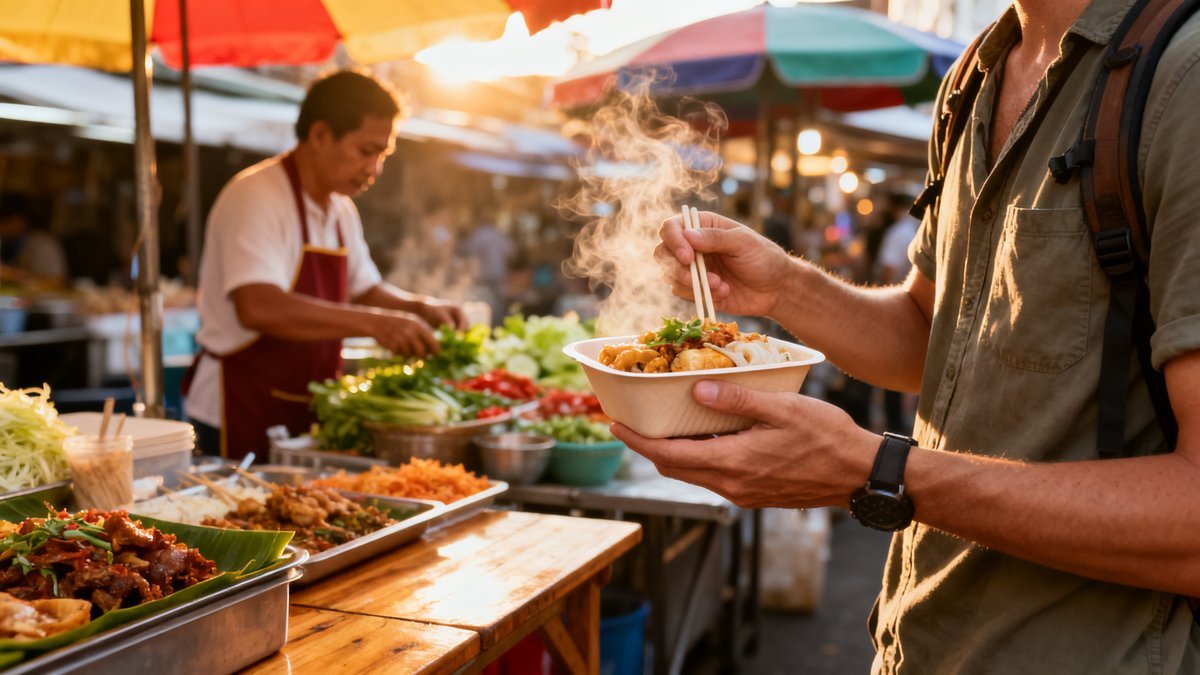
Street food gives you the real flavor of a place for a fraction of restaurant prices. But one bad meal can knock you out for three days. The CDC estimates that 30 to 70 percent of travelers experience some form of food-related illness abroad, yet you can slash that risk dramatically with a few observation-based habits. You don't need to avoid street food. You just need to know how to read a stall before you order. Understanding the common risk factors and developing a mental checklist before you travel will transform eating on the street from a nervous gamble into one of the most rewarding parts of your trip.
1. The Line Test: How Locals Pick the Safest Stalls
The single most reliable safety signal is a queue of locals. Not tourists with guidebooks — actual residents who eat there every week. A 2024 observational study in Bangkok's Chatuchak market found that stalls with a line of at least five local customers had zero reported food safety violations, while stalls serving mainly tourists accounted for 78% of the market's health citations. Locals won't return to a place that made them sick, and their continued patronage is the only food safety audit that updates in real time. When you see a line forming at 11 AM for a stall that does not even open until noon, pay attention — that is a powerful sign that something worth waiting for is being prepared.
Watch the turnover rate. A stall that sells out by 1 PM has high throughput, meaning ingredients don't sit around growing bacteria. If the vendor is cooking continuously and nothing pre-cooked sits in a warming tray for more than a few minutes, you're in good hands. The opposite — a stall with a single sad pile of lukewarm spring rolls that's been there since breakfast — is your cue to keep walking. Bonus points if you see mothers with young children eating there. Parents are the most risk-averse demographic on earth when it comes to food safety, and seeing families eating comfortably is one of the strongest endorsements a street stall can receive.
2. Spot Cleanliness in 30 Seconds Flat
You don't need a microbiology degree to assess a stall. Your eyes do the work in half a minute. First, look at the vendor's hands and workstation. A cook who handles money and then touches food without switching gloves or washing hands is running a cross-contamination factory. Second, check the oil. Fresh oil is clear and golden; oil that's been reused for days turns dark brown and foamy. Rancid oil doesn't just taste bad — oxidized fats can trigger gastrointestinal inflammation within hours. Also observe whether the vendor uses separate utensils for raw and cooked ingredients, as this is one of the most frequently overlooked hygiene practices in open-air kitchens.
Travel Tip: Conde Nast Traveler recommends notifying your bank of travel dates through the app — not by phone. Most major banks now let you set travel notices digitally in under 2 minutes.
Scan the raw ingredients. Meat and seafood should sit on ice or inside a chilled container, not on a wooden board in 90-degree heat. The USDA's "danger zone" for bacterial growth runs from 40 to 140 degrees Fahrenheit, and a protein sitting at ambient tropical temperature hits that zone in under 30 minutes. Cut vegetables and sauces should be covered or stored in a display case, not left open to flies and dust. A clean stall has a dedicated hand-washing station with soap — ask yourself if you'd eat from a restaurant kitchen that didn't have a sink. Also look at the vendor's personal hygiene: clean apron, tied-back hair, and absence of visible cuts or bandages on hands are all encouraging signs.
3. What to Order and What to Skip
Cooked-to-order food is your safest bet, full stop. When you see a vendor drop fresh noodles into boiling water or throw raw meat onto a screaming-hot griddle, the heat kills surface bacteria instantly. Temperatures above 165 degrees Fahrenheit destroy most foodborne pathogens in seconds. Soups, stir-fries, and grilled skewers that go straight from flame to plate carry near-zero risk. In Vietnam, a bowl of pho assembled from simmering broth, fresh noodles, and raw beef that cooks in the bowl is a textbook example of safe street eating. In Thailand, pad thai cooked on a wok at extremely high heat follows the same principle — the short cooking time at high temperature is your safety guarantee.
Raw or room-temperature items demand more caution. Pre-cut fruit sold from a cart that's been sitting in the sun since morning is a gamble because the cut surface exposed to warm air and unwashed hands is a bacterial playground. Salads washed in tap water can carry Giardia or E. coli in regions where water treatment is inconsistent. Ice in your drink should look like a manufactured cylinder with a hole through the center — that shape means it came from a commercial ice factory, not a questionable tap-water freezer. Skip raw shellfish from street vendors entirely. The WHO recorded 56,000 cases of hepatitis A linked to undercooked street shellfish across Southeast Asia between 2020 and 2024. As a general rule, anything that has been peeled, sliced, or prepared well ahead of serving time carries inherently higher risk than items cooked to order in front of you.
4. Build Your Gut Defenses Before the Trip
Your gut microbiome adapts to your home diet, and throwing it into a completely new bacterial environment without preparation is asking for trouble. Start eating fermented foods — yogurt, kefir, kimchi, sauerkraut — two weeks before departure. A 2025 randomized trial of 800 travelers found that those who consumed probiotics daily for 14 days before and during their trip had a 42% lower incidence of traveler's diarrhea than the placebo group. The probiotic strains Lactobacillus rhamnosus GG and Saccharomyces boulardii showed the strongest protective effects. These strains are widely available in supplement form at any pharmacy and are worth adding to your travel medicine kit.
Pack a small kit: oral rehydration salts cost under $2 at any pharmacy and will save you if dehydration hits. Activated charcoal tablets can bind to certain bacterial toxins in your gut, though they're not a cure-all. Imodium stops symptoms but traps the pathogen inside you longer, so only use it when you absolutely must get on a bus or plane. Your phone should have the address of the nearest clinic saved offline in every city on your itinerary. Most cases of food poisoning resolve within 24 to 48 hours with rest and fluids, but if you spike a fever above 102 degrees or see blood, you need a doctor immediately. Preparing your body before travel is just as important as being vigilant while eating, and the combination of probiotics, smart ordering, and a well-stocked medical kit will keep you healthy on even the most adventurous culinary journeys.
Street food represents one of the most authentic and affordable ways to experience local cuisine while traveling abroad. The best street food vendors often specialize in just one or two signature dishes, perfecting their recipes over decades and building loyal customer bases among local residents who return daily. Following crowds of local diners to stalls with high customer turnover is a reliable strategy for finding both delicious and fresh options, as popular vendors sell through their ingredients quickly and serve food that has not been sitting out for extended periods.
Food safety concerns should not deter adventurous eaters from exploring vibrant street food scenes around the world, as some of the safest meals can be found at busy stalls where ingredients are cooked to order at high temperatures. Observing basic precautions like choosing stalls with visible cleanliness standards, avoiding raw items in areas with questionable water quality, and washing hands frequently allows travelers to sample local flavors with minimal risk while gaining culinary experiences that become highlights of their travel memories.
Street food represents one of the most authentic and affordable ways to experience local cuisine while traveling abroad. The best street food vendors often specialize in just one or two signature dishes, perfecting their recipes over decades and building loyal customer bases among local residents who return daily. Following crowds of local diners to stalls with high customer turnover is a reliable strategy for finding both delicious and fresh options, as popular vendors sell through their ingredients quickly and serve food that has not been sitting out for extended periods.
Food safety concerns should not deter adventurous eaters from exploring vibrant street food scenes around the world, as some of the safest meals can be found at busy stalls where ingredients are cooked to order at high temperatures. Observing basic precautions like choosing stalls with visible cleanliness standards, avoiding raw items in areas with questionable water quality, and washing hands frequently allows travelers to sample local flavors with minimal risk while gaining culinary experiences that become highlights of their travel memories.
Street food represents one of the most authentic and affordable ways to experience local cuisine while traveling abroad. The best street food vendors often specialize in just one or two signature dishes, perfecting their recipes over decades and building loyal customer bases among local residents who return daily. Following crowds of local diners to stalls with high customer turnover is a reliable strategy for finding both delicious and fresh options, as popular vendors sell through their ingredients quickly and serve food that has not been sitting out for extended periods.
Food safety concerns should not deter adventurous eaters from exploring vibrant street food scenes around the world, as some of the safest meals can be found at busy stalls where ingredients are cooked to order at high temperatures. Observing basic precautions like choosing stalls with visible cleanliness standards, avoiding raw items in areas with questionable water quality, and washing hands frequently allows travelers to sample local flavors with minimal risk while gaining culinary experiences that become highlights of their travel memories.